

Different Types of Personalization You Need to Know
, Von MakeOne, 21 min Lesezeit
, Von MakeOne, 21 min Lesezeit
Different types of personalization, from AI-driven to behavioral, help brands boost customer engagement and business growth effectively.
Want to grow your business and make customers return? You should learn about the different types of personalization. Here are some popular trends in digital marketing:
Type of Personalization |
Description |
|---|---|
AI-driven personalization |
Uses artificial intelligence to give product suggestions and connect with customers. |
Dynamic content |
Changes content using customer data like location and time. |
Hyper-personalization |
Uses real-time data and analytics to give very special experiences online. |
Sarah Chen, a digital marketing analyst, says brands now make personal experiences for many people. This is a big change for customer experience and business growth.
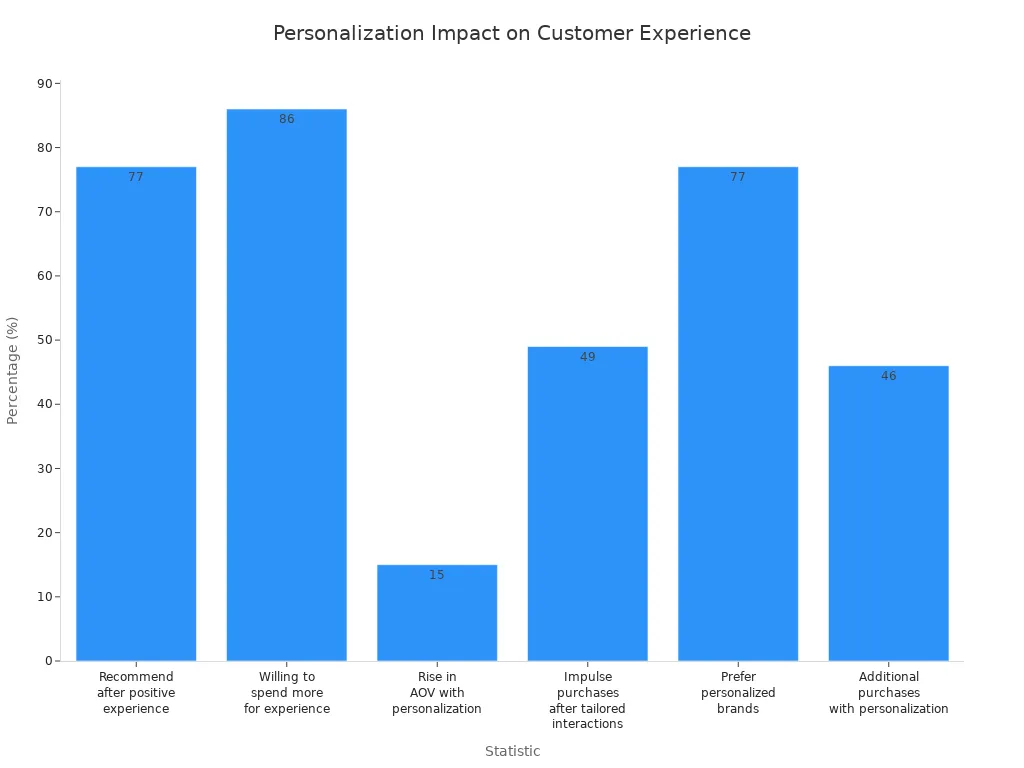
You will find useful ideas to give customers a personal experience. Think about what you need and which plans will help you give your customers the best experience.
Personalization makes customers feel special. It helps people feel like things are made just for them.
There are many types of personalization. These include content, product, communication, website, app, search, and advertising personalization. Each type uses data to make unique experiences for people.
Businesses get many good things from personalization. They can get more loyal customers. They can also get more sales and better engagement.
Using data well is very important for personalization. Brands should collect and study customer information. This helps them offer better things to people.
Even small businesses can use personalization. Simple things like using customer names or sending special emails can help a lot.
Personalization is common today. Brands use data and technology to make things feel special for you. There are different types of personalization. Each type works in its own way. You will see examples and uses for each type. This helps you pick what fits your needs.
Content personalization gives you messages and website layouts that match what you like. Companies stop using the same content for everyone. They focus on what matters to you. This makes your experience better and more important.
You feel happier.
Your experience gets better.
You might become a lead or buy something.
With big data and artificial intelligence, brands can now give you content made just for you.
When you visit a website, you may see articles, videos, or products chosen for you. Companies use your browsing history, location, and interests to decide what you see. This helps you feel noticed and special.
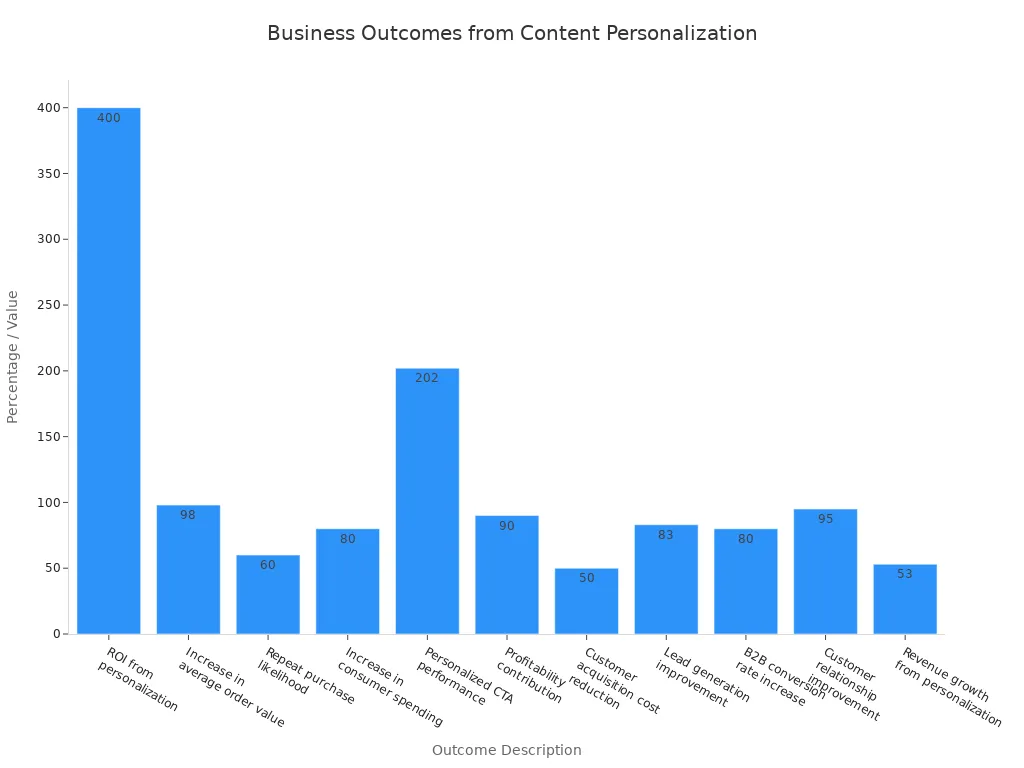
Here is what businesses see after using content personalization:
Outcome Description |
Percentage/Value |
|---|---|
ROI from personalization |
|
Increase in average order value |
98% |
Likelihood of repeat purchases |
60% |
Increase in consumer spending |
80% (averaging 38% more) |
Performance of personalized CTAs |
202% better |
Contribution to profitability |
90% of marketers agree |
Reduction in customer acquisition costs |
Up to 50% |
Improvement in lead generation |
83% of B2B marketers |
Increase in conversion rates for B2B |
80% |
Improvement in customer relationships |
95% of B2B marketers |
Revenue growth driven by personalization |
53% of B2B buyers |
Product personalization lets you change products to fit your style, size, or likes. You can pick colors, add your name, or choose features you want. This makes you feel close to the product.
Popular ways in stores and online include:
Product suggestions when items are out of stock.
Reminders at checkout about stock and delivery.
Social media posts under product details for proof.
Suggestions based on where you live.
Product ideas based on the weather.
Saving your likes for next time.
Showing stock info for your area.
Quizzes for product ideas.
Try-on features using Augmented Reality.
Quizzes to guess your size.
Rewards based on your group.
Discounts and suggestions added for you.
Fun loyalty programs.
Special looks to help you shop.
About 60% of women buy clothes on impulse. Personalization helps brands use this. Revenue can go up from 5% to over 25% with personalized ideas. Tech companies get 41% more clicks with personalized emails. AI-powered personalization helps stores earn 15% more.
Product personalization also lets you show who you are. A study found 60.9% of people felt close to personalized products. 65% thought the product showed their identity. Almost everyone liked the process or felt a bond.
Communication personalization means you get messages that match what you like and need. Companies use your data to send emails, texts, and alerts just for you. This makes you feel closer to the brand.
When businesses know what you like, they can change their products or services to fit you. This makes you feel closer to them.
Contextual communication means everyone knows what is happening in a conversation. This saves time and gives faster, better answers.
Important data for personalization includes demographic, firmographic, behavioral, and contextual data. This helps businesses meet your needs.
You see this with companies like Netflix, Amazon, and Spotify:
Netflix suggests shows based on what you watch.
Amazon shows products using your past buys and searches.
Spotify picks music that matches your taste.
These suggestions keep you interested and coming back.
Website personalization changes your online experience based on what you do, where you are, and what you like. Every visit feels special.
Website personalization helps you:
Look at more pages and stay longer.
See content that fits your likes.
Get changes based on your actions.
Trust the brand more.
Personalized experiences make you stay longer and buy more. Companies use changing CTAs, quizzes, and location-based ideas to make your visit special.
Livestorm uses CTAs that change with your actions.
Function of Beauty says your name after you take a quiz.
Hertz shows pages based on your location.
App personalization makes your mobile experience better by using your data and habits. You get alerts, content, and features that match what you do and like.
Technique |
Description |
|---|---|
Customized campaigns |
Making marketing fit your interests. |
Personalized push notifications |
Sending reminders based on what you do. |
User data utilization |
Using your profile and actions for ads. |
Content recommendations |
Giving you content to help you find things. |
Gamification techniques |
Learning what you like through fun ways. |
Habit formation |
Helping you build habits to use the app more. |
App personalization helps you use the app more and stay longer. You spend more time, try new features, and leave less often. Net Promoter Score goes up when the app fits your needs. Retention rates rise because you get a special experience every time.
Engagement rate shows how many users stay active.
Feature adoption rate shows how often you try new things.
Session time goes up with personalized content.
Retention rate rises when personalization works.
Churn rate drops as users stay happy.
Search personalization changes your search results using your data and habits. Search engines look at your history, location, and actions to show results that fit you.
You get better results.
Your searches are faster and easier.
The experience fits your needs.
Big search engines use personalization to help you. You find what you want faster, and results match your situation.
Advertising personalization shows you ads that match your interests and needs. Advertisers use your data to make messages that feel right for you.
Tactic |
Description |
|---|---|
Splitting people into groups by location, age, and habits. |
|
Customization |
Using your name and buying history for messages. |
Behavioral Triggers |
Sending messages based on what you do, like leaving a cart. |
Promotions and Incentives |
Giving discounts to make you buy or sign up. |
Content Marketing |
Making articles and videos for each group. |
Customization uses your name and history for messages.
Behavioral triggers send messages based on your actions.
Promotions and incentives give discounts that fit you.
Content marketing makes things for your interests.
Advertisers target very specific groups. For example, a luxury car brand shows ads to people with high incomes, not students. This makes ads fit your situation.
Personalized ads work well. Companies test messages to see which ones work best. Studies show personalized campaigns get more conversions. Metrics like click rate, conversion rate, and return on ad spend help measure success.
Now you know the different types of personalization. Each one uses data and context to make your experience fit you. You can use these ideas to make customers happy and grow your business.
There are many ways to use personalization strategies. Each one helps you meet your customers’ needs in a special way. Let’s see how these strategies work and when to use them.
Rule-based personalization uses simple rules you choose. For example, you can show a special offer to people from a certain city. You can also greet returning customers by their name. This works well if you have clear customer groups and not much data.
Aspect |
Rule-Based Personalization |
Predictive Personalization |
|---|---|---|
Operation |
Uses rules made by people |
Uses computer programs to do personalization |
Data Usage |
Mostly uses clear data like age or location |
Uses both clear and hidden data |
Suitability for E-commerce |
Good for small data and simple personalization |
Better for big data and changing content |
Maintenance |
Easy to start but can get hard to handle |
Needs more skill but grows with your business |
Future-Proofing |
May not work well with lots of data |
Handles big and tricky data better |
Tip: Rule-based personalization is easy to control at first. But it can get hard to manage as you get more customers.
Explicit personalization means you ask customers what they like. You can use surveys, forms, or account settings. This gives you clear answers straight from your customers.
Use web tools to see what customers do.
Get data from forms and surveys.
Ask for feedback to learn what customers want.
Change your messages based on age, gender, or past actions.
Always let customers choose what data they share. Make sure privacy is very important.
Implicit personalization learns from what customers do, not what they say. You watch their browsing, what they buy, and what device they use. This helps you suggest products or content without asking for more info.
Show local events based on where the customer lives.
Suggest products by looking at what customers have seen or bought.
Change calls to action based on how customers move on your site.
You make things feel personal without asking customers to do more.
Algorithmic personalization uses smart technology to guess what customers want. It looks at lots of data and finds patterns. This works best when you have many customers and lots of information.
Technique |
Description |
|---|---|
Suggests products based on what similar customers like. |
|
Content-based Filtering |
Recommends items based on what your customer has viewed or bought. |
Hybrid Recommendation Systems |
Combines different methods for better results. |
Smart Cross-selling Techniques |
Offers related products to increase order value. |
Dynamic Content Customization |
Changes the website in real time for each customer. |
Personalized Landing Pages |
Shows content that matches customer preferences. |
Adaptive Website Layouts |
Changes layout based on customer actions. |
AI and ML-driven Personalization |
Uses artificial intelligence for accurate predictions. |
You can use algorithmic personalization to make a special journey for every customer.
Segmentation-based personalization puts customers into groups with things in common. You might use age, location, or what they buy. This helps you send the right message to each group.
Customer segmentation lets you send the right message to each group.
Personalized messages often work better than just using groups.
Personalized emails and texts can work six times better than basic group messages.
Use customer segmentation with other personalization strategies for the best results.

You want products that feel like they belong to you. Product personalization lets you choose colors, styles, and features that match your taste. When you shop online, you see options to add your name or pick a design. This makes you feel special and helps you connect with what you buy.
Many brands use personalization to make shopping fun and easy. Take a look at how some companies do it:
Company |
Personalization Strategy |
Success Factors |
|---|---|---|
Shein |
Shows product recommendations based on what you like |
You get more choices and spend more time shopping |
Amazon |
Suggests items that fit your cart and past purchases |
You find new products and buy more |
Google Play |
Alerts you when prices drop on your wishlist |
You get deals on things you want |
Old Navy |
Gives real-time suggestions while you shop |
You see products that match your style |
Walmart |
Uses your location to show local deals and products |
You get offers that fit where you live |
You see personalization everywhere. You can customize cars, jewelry, gifts, and even furniture. Brands like West Elm let you pick the look of your couch. PopSockets lets you design your own phone grip. Subscription boxes like BarkBox ask about your pet’s needs and send treats that fit.
When you get a product made just for you, you feel happy and proud. You want to come back and shop again.
Service personalization means you get help and rewards that match your needs. You might join a loyalty program that gives you points for things you like. Many customers want rewards that fit their shopping habits. In fact, 73% of shoppers say they want personalized loyalty rewards, but only 45% of brands offer them.
When you get service that feels personal, you trust the brand more. You feel valued and understood. Almost 90% of customers say they will buy again after a good experience. Brands that use personalization see more engagement and satisfaction.
You notice service personalization when you get birthday discounts, special offers, or quick help from customer support. These touches make you feel important. You want to stay loyal and tell your friends about your favorite brands.
You want brands to notice you and treat you as a real person. Customer personalization helps you feel special during your whole journey. Companies use different ways to connect with you and meet your needs.
Demographic personalization uses facts like your age, gender, ethnicity, and income. Companies group you with people who are like you. This helps them send messages and offers that fit your life.
Here are some common demographic factors:
Demographic Factor |
Description |
Implications in Marketing |
|---|---|---|
Age |
Groups like children, teens, adults, and seniors. |
Changes ads, timing, and tone. |
Gender |
Considers gender without stereotypes. |
Affects channels and models. |
Ethnicity |
Focuses on cultural needs. |
Times ads for cultural events. |
Income |
Looks at what you can spend. |
Targets high-value products. |
You might see back-to-school ads for teens or fancy ads for people with more money. This kind of personalization makes your start with a brand feel smooth and right for you.
Psychographic personalization looks at your interests, values, and lifestyle. Brands use this to match what you care about and make your journey feel special.
You get messages that match your hobbies or beliefs.
Brands learn what you like and shape your experience.
You feel like the company understands you.
Psychographic data helps companies make onboarding that fits your needs. When brands know your journey, they build stronger relationships and make you want to stay.
Note: Psychographic personalization lets brands focus on what matters to you, not just your basic facts.
Behavioral personalization watches what you do online. Companies track your website visits, search history, and what you buy. They use this to guide your journey and make onboarding better.
Description |
|
|---|---|
Website Navigation |
Pages you visit, time spent, links clicked. |
Search History |
Words you search for, showing your interests. |
Purchase History |
What you buy or leave in your cart. |
App Usage |
How you use apps and which features you try. |
Content Consumption |
Articles or videos you enjoy. |
Social Media Activity |
Likes, shares, and comments. |
You might get a reminder about something you left in your cart. You may also see content based on your last visit. This makes your journey feel personal and helpful.
Personalization like this builds strong customer relationships. You feel important, so you come back and tell your friends. Studies show 80% of customers like companies that give personal experiences. When you get what you need, you stay loyal and support the brand.

You want your brand journey to be easy. It should not matter where you start or end. Omnichannel personalization helps with this. It links what you do on websites, apps, stores, and social media. You get one smooth experience that fits you.
You might look at products on your phone. You add things to your cart on your laptop. You finish buying in a store. Context-based support helps you keep your spot. Brands use smart tools to remember your choices. They help you start again where you stopped.
Here’s how brands make cross-platform experiences work:
MAC Cosmetics uses AI to suggest products you may like. It works on any device. Their Smart Recommender led to a 20.56% add-to-cart rate.
They share stories like Instagram to keep you interested. This gave them a 123.5% boost in homepage conversions.
Personalized notifications and special journeys across channels helped. They got a 14.45% clickthrough rate and a 16.69% conversion rate.
You get context-based support at every step. If you need help, customer support personalization gives answers that fit your journey. You do not get generic replies.
Brands must bring all your data together to connect your experience. This means mixing what you do online, in stores, and with partners. When brands break down data silos, they see everything about each customer.
Here’s what makes data integration work:
Brands make one profile for you from all your touchpoints. This helps them give context-based support and customer support personalization.
They use real-time tools to act fast when you do something.
You get offers and content that match your likes and needs.
Every channel works together, so your experience stays smooth.
Many companies find this hard. Over half of grocers say they cannot connect data across platforms. Data from online and in-store shopping is often split up. This makes it hard to give you the best context-based support. When brands fix this, you get a personal experience that makes you want to return.
You have seen how personalization changes your experience. Brands use smart data and grouping to make customers happy. They also use special ways to keep people coming back. Here are some real examples:
Key Strategy |
Description |
Outcome |
|---|---|---|
Data utilization |
Using what a customer does and buys |
More relevant messages |
Segmentation strategies |
Grouping by interests |
Higher engagement |
Personalization techniques |
Customizing content for each customer |
Better loyalty and retention |
Measurable results |
Tracking what works |
More conversions |
Do you want to begin?
Make your website and suggestions fit each person
Try new things and see what works best
Keep learning. Personalization changes as brands use more AI and first-party data. You can make every part of the customer experience better.
Personalization means you get things that match your likes. You might see messages, products, or offers just for you. Companies use your data to make your experience better. You feel special because brands notice what you want.
You get help faster and see better product ideas. You also get deals that fit your style. Shopping feels easier and more fun. You feel like the brand knows you.
Yes! Small businesses can use easy tools like email lists. They can also use customer surveys to learn about you. Even using your name can make a big difference.
Most brands try to keep your data safe. You should check your privacy settings. Only share what you feel okay with.


